
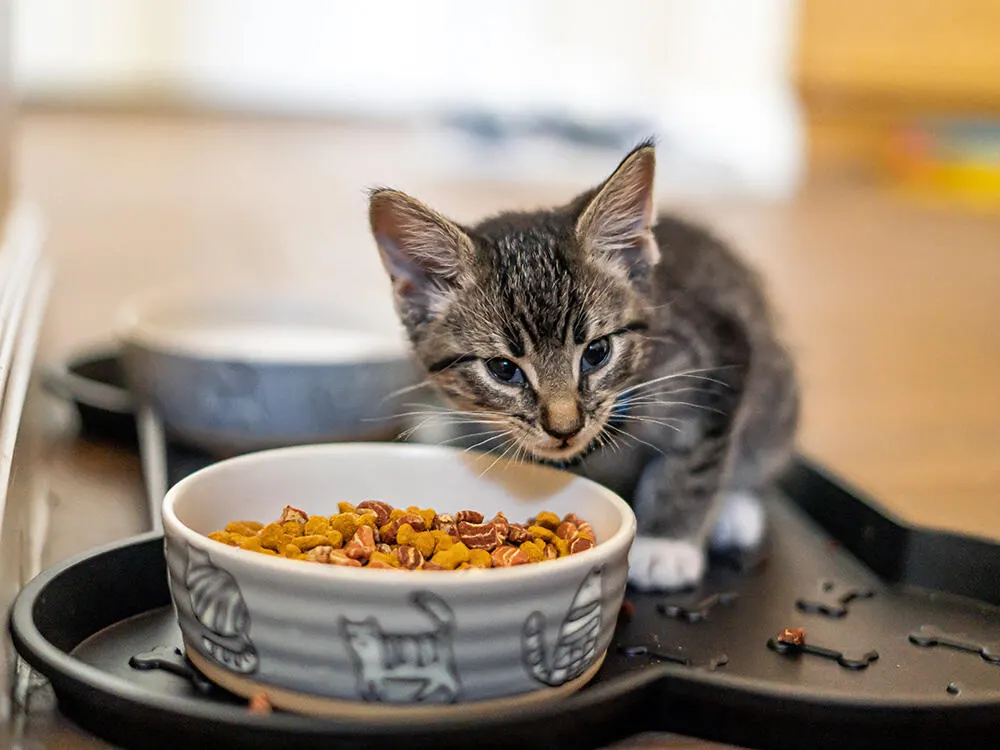
If you have a growing kitten at home, you may be wondering when can kittens eat dry food and whether it is safe to offer kibble while they are still very young. The answer depends on the kitten’s age, development, and ability to chew and swallow.
Many kittens begin exploring solid food at around four weeks old. However, dry kibble is usually introduced gradually, often softened at first, rather than immediately replacing milk or wet food. By approximately seven to eight weeks, many kittens can manage a fully solid kitten diet, although individual progress varies.
This guide from Kitty verse Store explains when kittens can start eating dry food, how to introduce it safely, what type of kibble to choose, how to combine wet and dry food, and how to recognize feeding problems.
When Can Kittens Eat Dry Food?
Kittens can usually begin trying softened dry kitten food at around four to six weeks of age, as they start the weaning process. At this stage, their teeth and chewing skills are still developing, so kibble should be softened with warm water or prepared kitten milk replacer when appropriate.
Many kittens become more comfortable eating dry food as they approach seven to eight weeks old. Some may need longer to adjust, so let your kitten’s development and appetite guide the transition.
Kitten Feeding Timeline
| Kitten’s age | Typical feeding stage |
|---|---|
| Birth to about 4 weeks | Mother’s milk or commercial kitten milk replacer is the main source of nutrition. |
| Around 4 weeks | Many kittens can begin exploring soft kitten food and a gradual weaning process. |
| Around 5–6 weeks | Kittens may begin trying softened kibble as they become more confident eating solid food. |
| Around 7–8 weeks | Many kittens can eat solid kitten food, including dry kibble, but individual readiness varies. |
| After weaning | Feed a complete and balanced kitten diet, with fresh water always available. |
This is a general guide, not a strict deadline. Kittens that are premature, underweight, unwell, or struggling to eat may need an individualized plan from a veterinarian.
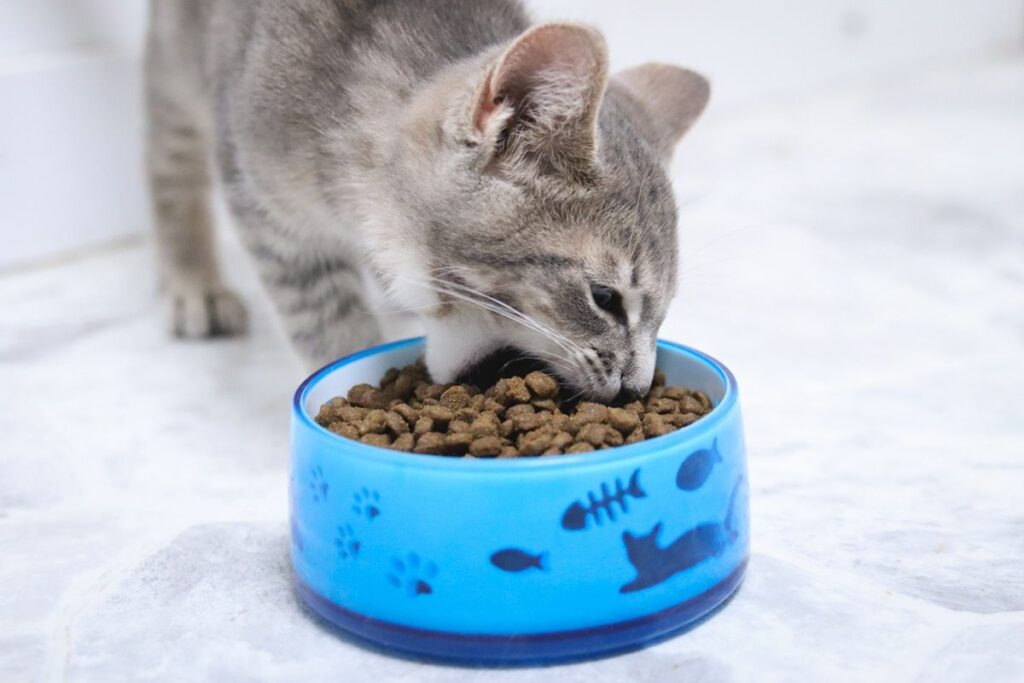
Can a 4 Week Old Kitten Eat Dry Food?
A four-week-old kitten may be able to try dry kitten food if it is softened into a manageable texture, but hard, dry kibble may be difficult for a kitten at this stage.
A common approach is to begin with soft wet kitten food or a smooth gruel. Once the kitten is eating confidently, you can introduce a small amount of kibble softened with warm water or prepared kitten milk replacer.
Do not force the kitten to chew or swallow food. If it cannot manage the texture, return to a softer option and ask a veterinarian for advice if feeding difficulties continue.
How to Introduce Dry Food to Kittens
A gradual introduction can help kittens become familiar with kibble’s taste and texture without making an abrupt change to their diet.
Step 1: Choose Food Made for Kittens
Select a complete and balanced kitten food labelled for growth or kittens. Kittens have different nutritional needs from adult cats, so adult food should not be their main diet during growth.
Step 2: Soften the Kibble
Place a small amount of dry kitten food in a clean dish. Add warm water or prepared kitten milk replacer, following appropriate preparation and handling guidance.
Allow the kibble to soften, then check that it is cool enough to serve. Mash it if needed so the kitten can manage it more easily.
Step 3: Offer a Small Amount
Place the softened food in a shallow dish and let the kitten investigate it. You can offer a little on a clean fingertip to encourage interest, but do not smear food on the kitten’s face or push its head into the dish.
Step 4: Increase the Texture Gradually
As the kitten becomes comfortable eating, gradually make the mixture less soft. Continue to monitor how well it chews and swallows.
Step 5: Move Toward Dry Kibble
When the kitten can comfortably eat solid food, gradually offer more dry kitten kibble. Keep fresh water available and make sure the kitten is consuming enough food to support healthy growth.
The weaning process should be gradual. If your kitten struggles, slow down and seek veterinary advice where needed.
Should Kittens Eat Wet Food or Dry Food First?
Wet food is often a convenient first solid food because its soft texture can be easier for young kittens to manage. Dry food can be introduced gradually as the kitten develops its chewing skills.
Both wet and dry foods can be part of a kitten’s diet if they are complete and balanced for growth. The choice may depend on the kitten’s age, preferences, health, and the feeding advice you receive from your veterinarian.
Wet food contains more moisture, while dry food is convenient to store and serve. Some owners choose to feed a combination of both. Whichever approach you use, make sure the overall diet meets your kitten’s nutritional needs and that fresh water is always available.
How to Choose the Right Dry Food for Kittens
Not every cat food is suitable for a growing kitten. When choosing kibble, consider the following:
Look for a Kitten or Growth Formula
Choose a food labelled as complete and balanced for kittens or growth. Check the package for feeding directions and the appropriate life stage.
Consider Kibble Size and Texture
Small pieces may be easier for a young kitten to handle, especially while it is learning to chew. If the kitten struggles with dry kibble, soften it rather than forcing it to eat hard pieces.
Check the Feeding Instructions
Use the package guidance as a starting point, then adjust with your veterinarian’s help according to your kitten’s age, weight, body condition, and growth.
Introduce New Food Gradually
Sudden diet changes may upset a kitten’s digestive system. When changing brands or formulas, transition gradually unless your veterinarian recommends a different approach.
How Much Dry Food Should a Kitten Eat?
There is no single portion size that is right for every kitten. The amount depends on its age, weight, activity, health, and the calorie content of the food.
To plan meals:
- Check the feeding chart on the kitten food packaging.
- Use your kitten’s current weight and age to estimate a starting amount.
- Divide the daily amount into suitable meals, following the package guidance and veterinary advice.
- Monitor your kitten’s appetite, body condition, and weight.
- Adjust the amount with your veterinarian if growth or weight is not progressing as expected.
Avoid relying only on how much food remains in the bowl. Some kittens eat quickly, while others prefer smaller meals. If several kittens share a bowl, monitor each one to make sure it is getting enough.
How Often Should Kittens Eat Dry Food?
Kittens generally need more frequent meals than adult cats because they are growing and have small stomachs.
During weaning, offer small amounts of suitable food regularly throughout the day. As your kitten grows, its feeding schedule can be adjusted according to its age, food, appetite, and veterinary guidance.
If you leave dry food available between meals, measure the amount so you can monitor intake. Unlimited access may not suit every kitten, particularly if it tends to overeat or if you need to track how much each kitten consumes.
Can Kittens Eat Dry Food Without Water?
Kittens eating dry food should always have access to fresh, clean drinking water. Water is especially important when a larger portion of the diet comes from kibble, which contains less moisture than wet food.
Use a shallow, stable bowl that your kitten can reach easily. Keep it clean and refill it regularly.
Do not force water into a kitten’s mouth. If your kitten is not drinking, appears dehydrated, or is unwell, seek veterinary advice.
Can Kittens Eat Adult Cat Dry Food?
Adult cat food should not be the main diet for a growing kitten unless a veterinarian specifically recommends it. Kittens need food formulated to support growth and development.
Choose a complete and balanced kitten formula and follow its feeding instructions. Many cats transition to adult food at around one year of age, but the appropriate timing can vary depending on the cat and the food being used.
Common Mistakes to Avoid When Feeding Kittens Dry Food
Introducing Kibble Too Quickly
A sudden switch from milk or soft food to hard kibble can be difficult for a young kitten. Introduce dry food gradually and soften it when needed.
Giving Cow’s Milk
Cow’s milk is not a suitable replacement for a mother’s milk or commercial kitten milk replacer. It may cause digestive upset and does not provide the right nutritional balance.
Feeding Only Adult Cat Food
Adult formulas may not meet the needs of a growing kitten. Choose food labelled for kittens or growth.
Ignoring Fresh Water
Always provide fresh water, even if your kitten also eats wet food.
Making Abrupt Diet Changes
Sudden changes can cause digestive problems. Introduce a new food gradually unless a veterinarian advises otherwise.
Ignoring Feeding Difficulties
A kitten that repeatedly refuses food, struggles to chew or swallow, or fails to gain weight may need veterinary assessment. Do not force-feed without professional instruction.
Signs Your Kitten May Be Having Trouble Eating
Monitor your kitten during and after meals. Contact a veterinarian if you notice:
- Repeated refusal to eat.
- Difficulty chewing or swallowing.
- Coughing or choking during feeding.
- Repeated vomiting or persistent diarrhea.
- Unusual weakness or low energy.
- Failure to gain weight or unexplained weight loss.
- Signs of dehydration.
Seek urgent veterinary help if your kitten has difficulty breathing, becomes unresponsive, or is extremely weak. Young kittens can become unwell quickly, so do not wait for symptoms to worsen.
Frequently Asked Questions About Kittens and Dry Food
When can kittens eat dry food without it being softened?
Many kittens can manage dry kibble as they approach seven to eight weeks old, but readiness varies. Introduce it gradually and make sure your kitten can chew and swallow comfortably.
Can a 5 week old kitten eat dry kibble?
A five-week-old kitten may be ready to try kibble softened with warm water or prepared kitten milk replacer. Many kittens still do better with soft food during early weaning.
Can a 6 week old kitten eat dry food?
Some six-week-old kittens can eat softened kibble and may begin trying firmer pieces. Watch how your kitten manages the food and continue offering a suitable diet for its stage of development.
Is dry food enough for a kitten?
A complete and balanced kitten dry food can provide the nutrients a kitten needs when fed appropriately. Some owners also feed wet food. Your veterinarian can help you choose a feeding plan suited to your kitten.
Should I soak kitten kibble in milk?
If you need to soften kibble during weaning, use warm water or prepared commercial kitten milk replacer as appropriate. Do not use cow’s milk. Follow the milk replacer instructions and discard leftover moistened food safely.
When should a kitten stop eating kitten food?
Many cats transition to adult food at around 12 months, but timing can vary. Ask your veterinarian when to change your kitten’s diet and how to make the transition gradually.
What if my kitten refuses dry food?
Your kitten may not be ready for the texture, may prefer a softer food, or may have a health issue. Offer an appropriate soft kitten food and seek veterinary advice if refusal persists, the kitten eats too little, or it shows other signs of illness.
Conclusion
Knowing when kittens can eat dry food helps you introduce kibble at a stage when your kitten is ready to manage it. Many kittens begin exploring solid food at around four weeks, try softened kibble during early weaning, and become able to eat dry kitten food more confidently as they grow.
Choose a complete and balanced kitten formula, introduce changes gradually, provide fresh water, and monitor your kitten’s appetite and weight. If your kitten struggles to eat or shows signs of illness, contact a veterinarian for guidance.
At Kittyverse Store, we encourage every kitten owner to make feeding decisions based on the kitten’s age, development, and individual needs so that it can grow with appropriate care and nutrition.