
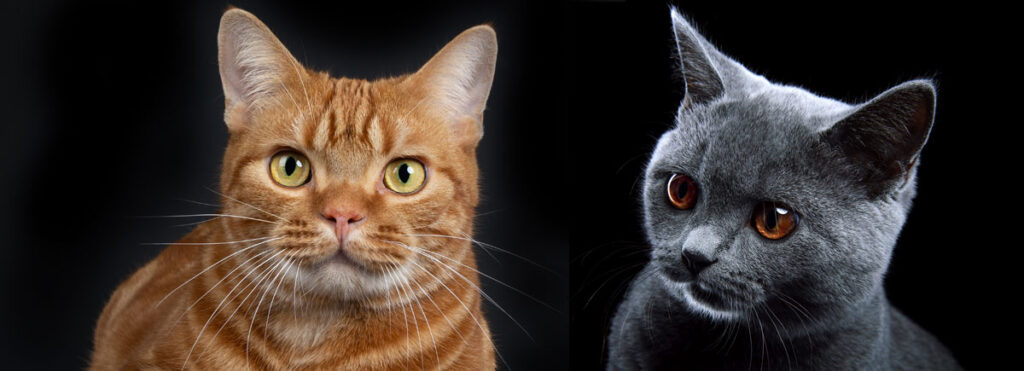
Are you trying to decide between an American Shorthair and a British Shorthair? These two popular short-haired cat breeds share several characteristics, including affectionate personalities, short coats, and sturdy bodies. However, they have important differences in appearance, activity levels, history, and the way they typically interact with their families.
Understanding the differences between American Shorthair vs British Shorthair cats can help you determine which breed may suit your home, lifestyle, and expectations.
In this complete guide, we will compare their physical characteristics, temperament, size, grooming requirements, health considerations, feeding needs, kitten development, and everyday care.
Whether you are researching American Shorthair kittens, British Shorthair kittens, or simply learning about these two breeds, this article will help you understand what makes each one distinctive.
American Shorthair vs British Shorthair: Quick Comparison
| Feature | American Shorthair | British Shorthair |
|---|---|---|
| Origin | United States | Great Britain |
| General build | Medium to large, muscular and athletic | Medium to large, compact and powerful |
| Face shape | Broad head with a slightly longer-than-wide appearance | Characteristically round head with full cheeks |
| Coat | Short, dense, firm-textured coat | Short, very dense, plush coat |
| Commonly recognised colours | Many colours and patterns, including silver tabby | Many colours and patterns, including blue |
| Typical temperament | Easygoing, intelligent, independent, and playful | Calm, affectionate, independent, and often reserved |
| Activity | Enjoys interactive play and hunting-style games | Often less active but still benefits from daily play |
| Grooming | Regular brushing to manage loose hair | Regular brushing, with extra attention during shedding |
| Social preferences | Often enjoys participating in family activities | Often prefers companionship without constant handling |
| General maturity | May take several years to reach full physical development | Commonly takes around three to five years to mature fully |
These are general breed characteristics. Individual cats may differ according to genetics, early socialisation, environment, health, and personality.
1. Origin and History: American Shorthair vs British Shorthair
Although the breeds share some physical similarities, they developed in different countries and have distinct histories.
American Shorthair History
The American Shorthair traces its ancestry to short-haired cats that accompanied early settlers to North America.
These cats were valued for their ability to hunt rodents around homes, farms, and ships. Over time, selective breeding helped establish the American Shorthair as a recognised pedigree breed.
The breed is known for its sturdy body, balanced proportions, and practical working-cat background.
British Shorthair History
The British Shorthair developed in Great Britain from domestic cats with a long history in the region.
Its development included selective breeding, and Persian cats contributed to some British Shorthair breeding lines during the breed’s history.
The modern British Shorthair is recognised for its rounded head, substantial body, dense coat, and calm appearance.
How Are Their Histories Different?
The American Shorthair developed from North American working cats, while the British Shorthair developed from British domestic-cat ancestry.
Both breeds have a history associated with practical rodent control, but their modern breed standards emphasise different physical characteristics.
2. Appearance: How to Tell the Two Breeds Apart
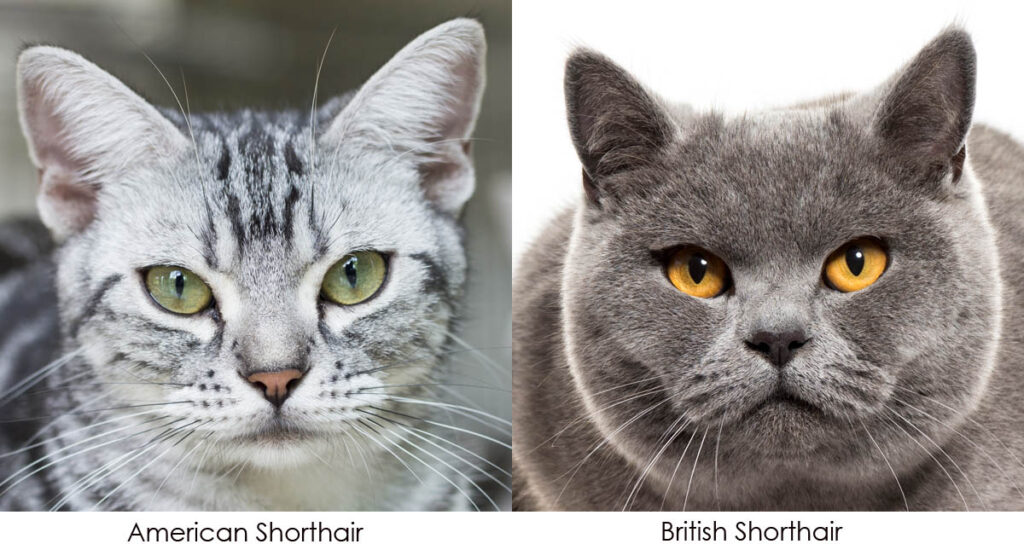
One of the easiest ways to distinguish an American Shorthair from a British Shorthair is to examine the overall body shape, face, and coat.
American Shorthair Appearance
The American Shorthair has a strong, balanced body with well-developed muscles.
Its appearance generally includes:
- A medium-to-large body with athletic proportions.
- A broad head that is slightly longer than it is wide.
- A strong jaw and well-developed muzzle.
- Medium-sized ears.
- A short, dense coat with a firm texture.
- A range of colours and patterns.
The American Shorthair should look powerful and well-proportioned without being excessively heavy or exaggerated.
British Shorthair Appearance
The British Shorthair has a compact, powerful build and a distinctive rounded appearance.
Common features include:
- A broad, rounded head.
- Full cheeks and prominent whisker pads.
- Large, round eyes.
- A broad chest and sturdy body.
- Short-to-medium strong legs.
- A short, extremely dense, plush coat.
Its thick coat and rounded features give it the familiar teddy-bear-like appearance.
Which Breed Has the Rounder Face?
The British Shorthair is particularly recognised for its round head, full cheeks, and rounded eyes.
The American Shorthair also has a broad head and strong facial features, but its overall head shape is generally less rounded than that of the British Shorthair.
3. Size and Weight: Which Cat Is Bigger?
Both breeds can be medium to large cats, but their proportions are different.
American Shorthair Size
American Shorthairs have a muscular, athletic build.
Males are generally larger than females, although size varies considerably between individual cats.
Their appearance is characterised by strength, balance, and agility rather than an especially compact body.
British Shorthair Size
British Shorthairs have a sturdy, broad, and compact build.
They may appear particularly substantial because of their muscular bodies and dense coats.
Males are often larger than females, and the breed develops relatively slowly.
American Shorthair vs British Shorthair Size Difference
The British Shorthair often has a more compact and heavy-set appearance, while the American Shorthair generally has a more athletic outline.
However, you should not assume that every British Shorthair will weigh more than every American Shorthair.
Body condition, sex, age, genetics, and individual development all influence a cat’s size.
4. Personality and Temperament
Temperament is an important consideration when comparing American Shorthair vs British Shorthair cats.
Both breeds are commonly described as friendly and adaptable, but they may express affection and playfulness in different ways.
American Shorthair Personality
American Shorthairs are generally described as easygoing, intelligent, and independent.
Many enjoy spending time with their families while also being comfortable entertaining themselves.
Typical characteristics may include:
- Enjoying interactive play.
- Showing curiosity about household activities.
- Using hunting instincts during play.
- Appreciating human companionship.
- Being able to spend some time independently.
- Adapting to different household environments.
Some American Shorthairs enjoy sitting on their owner’s lap, while others prefer staying nearby.
British Shorthair Personality
British Shorthairs are often described as calm, quiet, affectionate, and independent.
Many enjoy being near their owners without necessarily wanting to be carried or held frequently.
Typical characteristics may include:
- Enjoying quiet companionship.
- Being comfortable relaxing near family members.
- Showing affection without constant demands for attention.
- Appreciating predictable routines.
- Enjoying play sessions while also spending time resting.
- Preferring gentle, respectful handling.
Individual British Shorthairs may be more outgoing or playful than the general breed description suggests.
Which Breed Is More Affectionate?
Both breeds can form strong bonds with their owners.
American Shorthairs may show affection through interactive play, following family members, or spending time nearby.
British Shorthairs may often show affection by sitting beside their owners and enjoying calm companionship.
Neither breed is guaranteed to be more affectionate than the other. Individual personality and socialisation are important.
5. Activity Level and Playfulness
American Shorthairs and British Shorthairs both benefit from daily activity, but their typical energy levels may differ.
American Shorthair Activity
American Shorthairs often enjoy chasing toys, exploring their surroundings, and participating in interactive games.
Activities may include:
- Feather-wand games.
- Toy mice and other chase toys.
- Puzzle feeders.
- Climbing and exploring cat-safe spaces.
- Short training sessions.
- Hunting-style play.
Providing regular opportunities for activity can help support physical fitness and mental stimulation.
British Shorthair Activity
British Shorthairs are often described as relatively calm and less inclined toward constant high-energy activity.
However, they still need opportunities to move, play, explore, and express normal feline behaviours.
Suitable activities include:
- Short interactive play sessions.
- Puzzle toys.
- Food-search games.
- Scratching posts.
- Cat trees and safe climbing opportunities.
- Gentle chasing games.
Because some British Shorthairs are less active, owners should pay attention to portion sizes and body condition.
Which Breed Is More Playful?
American Shorthairs are often associated with active hunting-style play, while British Shorthairs are commonly described as calmer.
However, kittens of either breed can be energetic, curious, and playful.
Provide age-appropriate toys and regular interaction regardless of the breed you choose.
6. Grooming and Shedding
Both breeds have short coats, but their coat textures differ.
American Shorthair Grooming
The American Shorthair has a short, dense coat that is generally straightforward to maintain.
Regular brushing or combing helps remove loose hair and reduce the amount shed around the home.
Grooming should also include:
- Checking the ears.
- Trimming the nails when needed.
- Maintaining dental hygiene.
- Monitoring the skin and coat.
- Checking for unusual hair loss or irritation.
British Shorthair Grooming
The British Shorthair’s coat is short but exceptionally dense and plush.
Regular brushing helps remove loose hair and maintain coat condition.
Some British Shorthairs shed more noticeably during seasonal coat changes, so additional brushing may be useful at those times.
Routine care should also include nail trimming, dental hygiene, and occasional ear checks.
Which Breed Sheds More?
Both breeds shed.
The British Shorthair’s dense coat may release a noticeable amount of loose hair during shedding periods, but the amount varies between individuals.
Neither breed should be considered completely non-shedding.
7. Coat Colours and Patterns
American Shorthairs and British Shorthairs both occur in a variety of colours and patterns.
American Shorthair Colours
American Shorthairs are recognised in many colours and patterns, including:
- Silver tabby.
- Brown tabby.
- Black.
- White.
- Blue.
- Red.
- Cream.
- Tortoiseshell.
- Various tabby-and-white combinations.
Silver and brown tabby patterns are particularly familiar examples of the breed.
British Shorthair Colours
British Shorthairs are also available in a wide range of colours and patterns.
Examples include:
- Blue, often described as grey.
- Black.
- White.
- Cream.
- Red.
- Silver.
- Golden.
- Tabby patterns.
- Tortoiseshell.
- Colourpoint patterns.
The blue British Shorthair is especially well known, but blue is only one of the breed’s recognised colour varieties.
Is a Blue Cat Automatically a British Shorthair?
No.
Blue is a coat colour, not proof of breed.
Other cat breeds and non-pedigree cats can also have blue or grey coats. Breed identification should consider pedigree documentation and the cat’s overall characteristics rather than colour alone.
8. Health and Lifespan
Both breeds can live for many years with appropriate care, but no breed is completely free from health risks.
American Shorthair Health
American Shorthairs are generally regarded as a robust breed.
However, individual cats can still develop common feline health problems, including dental disease, obesity, and other age-related conditions.
Responsible breeding, preventive veterinary care, appropriate nutrition, and maintaining a healthy body condition are important.
British Shorthair Health
British Shorthairs are also generally regarded as sturdy cats.
However, owners should be aware of potential health concerns, including hypertrophic cardiomyopathy (HCM), a disease affecting the heart muscle that can occur in cats.
British Shorthairs can also gain excess weight if their calorie intake consistently exceeds their energy needs.
Responsible breeders should be able to discuss the health history of their breeding cats and any relevant screening practices.
How Long Do American Shorthair Cats Live?
American Shorthair lifespan varies according to genetics, environment, nutrition, preventive care, and individual health.
A well-cared-for cat may live well into its teens, but no particular lifespan can be guaranteed.
How Long Do British Shorthair Cats Live?
British Shorthairs can also live into their teens, with individual lifespan depending on genetics, lifestyle, and health.
The best way to support longevity is to provide suitable nutrition, regular veterinary care, safe housing, exercise, and attention to changes in behaviour or health.
Important: Breed descriptions cannot diagnose or predict an individual cat’s health. Discuss breed-related screening and preventive care with a veterinarian.
9. Feeding and Nutrition
Both breeds need a complete and balanced diet appropriate for their life stage.
Feeding an American Shorthair
An American Shorthair’s food intake should reflect its age, body weight, activity level, and overall condition.
Because many enjoy active play, their calorie requirements may vary considerably between individuals.
Feeding a British Shorthair
British Shorthairs can have a relatively calm lifestyle, and some may be prone to gaining excess weight when overfed.
Measured portions and regular body-condition monitoring can help maintain a healthy weight.
Can Both Breeds Eat the Same Cat Food?
Yes, provided the food is complete and balanced for each cat’s life stage and individual needs.
For example, a kitten needs a suitable growth formula, while a healthy adult cat generally needs an adult-maintenance diet.
The breed name alone does not determine the correct food.
Always provide fresh drinking water and seek veterinary advice if your cat has special nutritional requirements.
10. American Shorthair Kitten vs British Shorthair Kitten
Kittens of both breeds are curious, playful, and still developing physically and behaviourally.
However, there may be visible differences in their appearance.
American Shorthair Kittens
American Shorthair kittens may show:
- A sturdy but relatively athletic body.
- A broad head with a less exaggerated roundness.
- A short, dense coat.
- An alert and curious expression.
- A variety of colours and patterns.
Their adult appearance develops gradually, so young kittens may not yet display all the proportions associated with mature cats.
British Shorthair Kittens
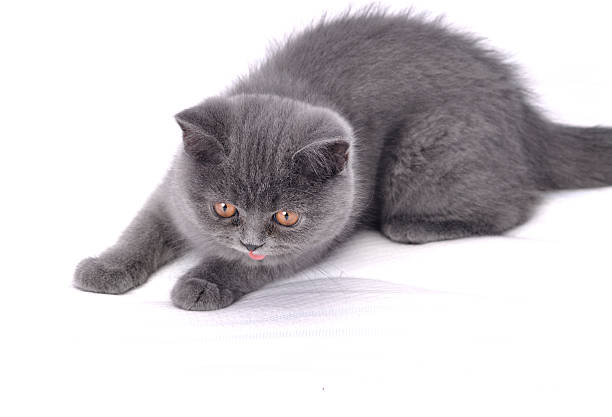
British Shorthair kittens may show:
- A rounded head.
- Full cheeks that become more pronounced with maturity.
- A sturdy body.
- A dense, plush coat.
- Large, rounded eyes.
Their bodies and facial features continue developing as they mature.
How Long Do These Kittens Take to Mature?
Both breeds may take several years to reach full physical development.
British Shorthairs are particularly known for slow maturation, often taking around three to five years to reach their full adult development.
American Shorthairs may also continue developing for several years.
Do not judge a kitten’s eventual adult size or appearance solely by its age or current weight.
11. Are American Shorthair and British Shorthair Cats Good Family Pets?
Both breeds can be suitable companions for families, but the way an individual cat responds to children, visitors, and other pets depends on its temperament and experiences.
American Shorthairs in Family Homes
American Shorthairs are often described as adaptable and easygoing.
Many enjoy interactive play and can adjust to different household routines.
Children should still be taught to handle cats gently, respect their space, and avoid disturbing them while eating or sleeping.
British Shorthairs in Family Homes
British Shorthairs are often calm and patient, and many enjoy living with families.
However, some dislike being carried or handled excessively.
Children should be encouraged to allow the cat to approach them voluntarily and to respect signs that it wants space.
Can They Live With Other Pets?
Both breeds may live successfully with other cats or dogs when introductions are handled carefully.
Individual temperament, previous socialisation, available space, and the behaviour of the other animals all matter.
Introduce pets gradually and provide separate resources, hiding places, and safe resting areas.
12. Apartment Living: Which Breed Can Adapt?
Both American Shorthairs and British Shorthairs can adapt to apartment living when their needs are met.
A suitable indoor environment should provide:
- Clean litter trays.
- Fresh water.
- Appropriate food.
- Scratching surfaces.
- Comfortable resting areas.
- Toys and mental stimulation.
- Opportunities for climbing and exploration.
- Daily interaction and play.
American Shorthairs may appreciate additional opportunities for active play and exploration.
British Shorthairs may enjoy a calmer environment, but they still need regular activity and stimulation.
A cat’s individual personality and the quality of its environment are more important than assuming a breed will automatically thrive in a particular home.
13. Training and Intelligence
Both breeds are intelligent and can learn household routines.
American Shorthair Training
American Shorthairs may enjoy interactive training and games.
Positive reinforcement can be used to encourage behaviours such as:
- Using scratching posts.
- Entering a carrier.
- Responding to simple cues.
- Playing with appropriate toys.
- Exploring puzzle feeders.
British Shorthair Training
British Shorthairs can also learn through gentle, reward-based training.
Short sessions that respect the cat’s preferences may be particularly useful.
Avoid punishment, frightening handling, or forcing a cat to participate when it is uncomfortable.
14. American Shorthair vs British Shorthair: Cost and Buying Considerations
The price of an American Shorthair or British Shorthair kitten can vary significantly.
Factors affecting price may include:
- Country and location.
- Breeder reputation and practices.
- Pedigree documentation.
- Age and availability.
- Coat colour and pattern.
- Veterinary care and screening.
- Registration and other documentation.
- Transportation costs.
There is no reliable universal price difference between these breeds that applies to every location and breeder.
Before acquiring a kitten, ask about its age, health history, vaccination and parasite-control records, parentage, and the conditions in which it was raised.
A pedigree certificate or registration document should be verified with the relevant organisation.
Avoid choosing a kitten solely because of its coat colour, advertised price, or appearance.
15. American Shorthair vs British Shorthair: Which One Fits Your Lifestyle?
Instead of assuming one breed is suitable for everyone, consider the characteristics that matter most to you.
| Your preference | Breed characteristics to consider |
|---|---|
| You enjoy interactive play | American Shorthairs are often enthusiastic about hunting-style games |
| You prefer a calm companion | British Shorthairs are commonly described as calm and relatively quiet |
| You like a rounded, teddy-bear-like appearance | The British Shorthair is known for its rounded head and plush coat |
| You prefer an athletic appearance | The American Shorthair generally has a balanced, muscular outline |
| You want a short-coated cat | Both breeds have short coats, although their textures differ |
| You want an independent companion | Both breeds can be independent while enjoying human companionship |
| You live in an apartment | Both can adapt when provided with appropriate enrichment and care |
| You have children | Either may be suitable with respectful handling, supervision, and appropriate introductions |
These characteristics are general tendencies rather than guarantees. Meeting the individual cat and learning about its temperament can be more informative than relying on breed descriptions alone.
16. Common Mistakes When Comparing These Breeds
Mistake 1: Assuming Every Grey Cat Is a British Shorthair
Many cats have grey or blue coats. Coat colour alone does not establish pedigree.
Mistake 2: Assuming British Shorthairs Never Want to Play
British Shorthairs can enjoy play and exploration. Their typical activity level does not mean they should be left without stimulation.
Mistake 3: Assuming American Shorthairs Are Always Highly Active
American Shorthairs often enjoy interactive play, but individual activity levels vary.
Mistake 4: Choosing Based Only on Appearance
A cat’s long-term care requirements, temperament, health, and compatibility with your household are important considerations.
Mistake 5: Ignoring Weight Management
Both breeds need appropriate portions and regular monitoring of body condition.
Mistake 6: Assuming Pedigree Guarantees Perfect Health
Pedigree status does not eliminate the possibility of inherited or acquired health problems. Responsible breeding and veterinary care remain important.
17. Frequently Asked Questions
Are American Shorthair and British Shorthair cats the same breed?
No. They are distinct recognised breeds with different histories and breed characteristics.
What is the biggest difference between American Shorthair and British Shorthair cats?
The British Shorthair is particularly known for its rounded face, compact body, and very dense plush coat. The American Shorthair generally has a more athletic, balanced body and a slightly longer head shape.
Which breed is more active?
American Shorthairs are often described as enjoying more active interactive play, while British Shorthairs are commonly considered calmer. Individual cats may differ.
Are British Shorthairs more affectionate than American Shorthairs?
Not necessarily. Both can be affectionate. British Shorthairs may often prefer sitting beside their owners, while American Shorthairs may express affection through play and companionship.
Do American Shorthairs shed?
Yes. They have short, dense coats and shed hair. Regular brushing can help manage loose fur.
Do British Shorthairs shed?
Yes. Their dense coats shed, and brushing can help remove loose hair.
Are American Shorthairs good indoor cats?
They can adapt to indoor living when provided with exercise, enrichment, scratching surfaces, and suitable care.
Are British Shorthairs good indoor cats?
They can also adapt to indoor living. They still need play, stimulation, a suitable environment, and weight management.
Do American Shorthairs and British Shorthairs need different food?
Not necessarily. Both need complete and balanced food appropriate to their life stage and individual needs. Portions should be adjusted according to body condition and activity.
Which breed is easier to groom?
Both breeds have relatively manageable short coats. Their grooming needs are similar, although the British Shorthair’s very dense coat may benefit from extra attention during shedding periods.
Can American Shorthairs and British Shorthairs live together?
They may be able to live together successfully. Introductions should be gradual, and each cat should have access to its own food, water, litter facilities, and resting spaces.
Are British Shorthair kittens born with blue coats?
No. British Shorthairs come in multiple colours and patterns. Blue is a well-known variety, but it is not the only one.
Are American Shorthairs rare?
Availability varies by location and breeder. If you are looking for a pedigree American Shorthair, verify the kitten’s documentation and the breeder’s practices.
How can I identify a purebred American Shorthair?
Appearance alone is not enough to establish pedigree. Ask for reliable registration or pedigree documentation and verify it with the relevant organisation.
How can I identify a purebred British Shorthair?
Look for reliable pedigree documentation and verify the breeder and registration details. A round face or blue coat alone does not prove that a cat is a purebred British Shorthair.
Conclusion: Understanding American Shorthair vs British Shorthair
The American Shorthair and British Shorthair are two distinctive cat breeds that share several appealing qualities while differing in appearance, body proportions, and typical activity levels.
The American Shorthair is recognised for its balanced, muscular build, adaptable nature, and enjoyment of interactive play.
The British Shorthair is known for its rounded face, compact and powerful body, plush coat, and often calm approach to companionship.
Both breeds need appropriate nutrition, preventive veterinary care, regular grooming, daily enrichment, and a safe, comfortable home.
If you are considering either breed, take time to learn about its care requirements, meet individual cats when possible, and verify health and pedigree information before making a decision.
At Kittyverse Store, we encourage cat lovers to learn about breed characteristics and responsible ownership so they can make informed choices when welcoming a feline companion into their home.