
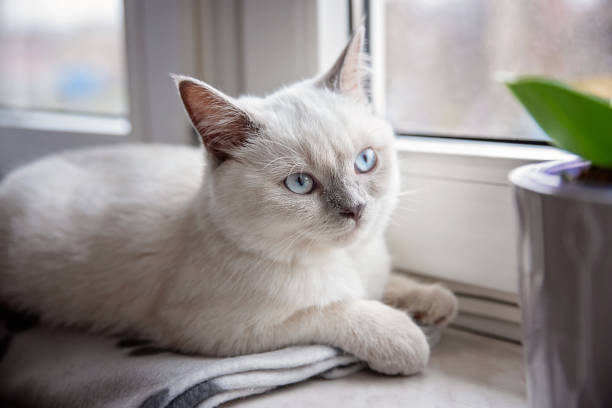
Learn about British Shorthair kittens with blue eyes, including appearance, personality, care, genetics, health, and eye color changes. A British shorthair kitten with blue eyes is one of the most captivating and sought-after feline companions in the world. Their plush teddy bear appearance, calm personality, and striking blue eyes make them irresistible to cat lovers. Whether you’re searching for your first kitten or adding another furry friend to your family, understanding everything about a British shorthair kitten with blue eyes is essential.
In this comprehensive guide, we’ll explore their appearance, personality, genetics, health, care requirements, grooming, nutrition, training, pricing, and much more. By the end of this article, you’ll know exactly what to expect when welcoming one of these adorable kittens into your home.
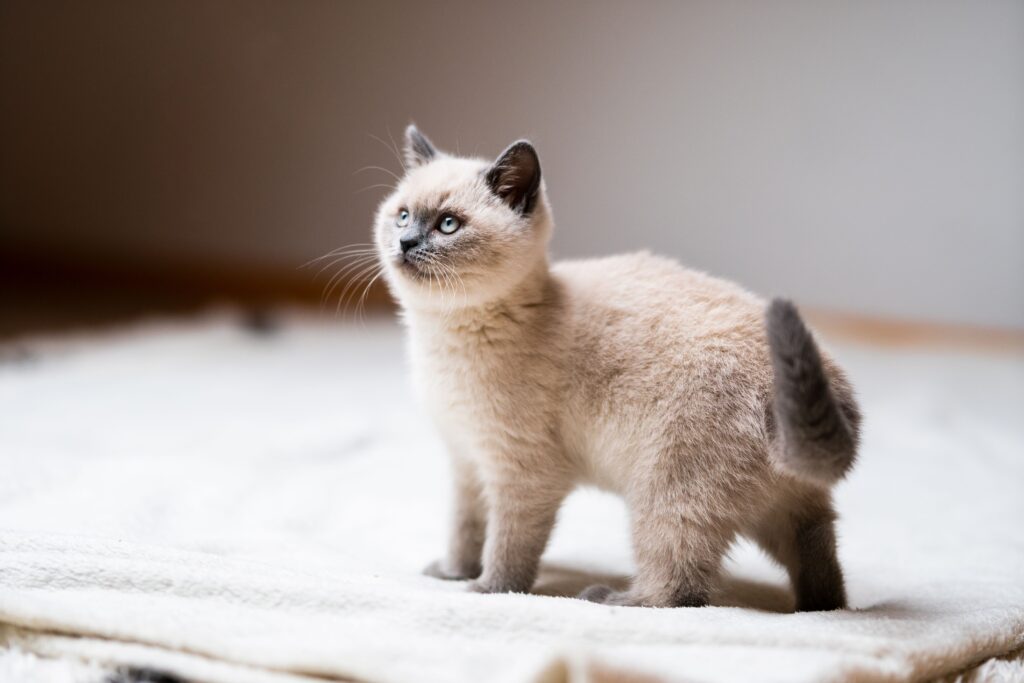
What Does a British Shorthair Kitten With Blue Eyes Look Like?
A British Shorthair kitten with blue eyes combines the breed’s signature plush, rounded build with striking, large eyes. How permanent those blue eyes are depends entirely on the kitten’s age and coat pattern.
All British Shorthair kittens are born with blue eyes, but in most color varieties, this shade changes as they mature.
1. Temporary Blue Eyes (Kitten Development)
- Natural Pigmentation Delay: Like almost all domestic felines, British Shorthair kittens are born with blue eyes because melanin (the pigment that determines eye color) develops gradually over time.
- The Transition Phase: Around 6 to 8 weeks of age, their eye color begins to shift. By 3 to 4 months, the blue typically fades into copper, deep amber, gold, or green, depending on their coat pattern.
2. Permanent Blue Eyes (Specific Coat Patterns)
For a British Shorthair to retain striking, permanent blue eyes into adulthood, they must possess specific genetic coat variations:
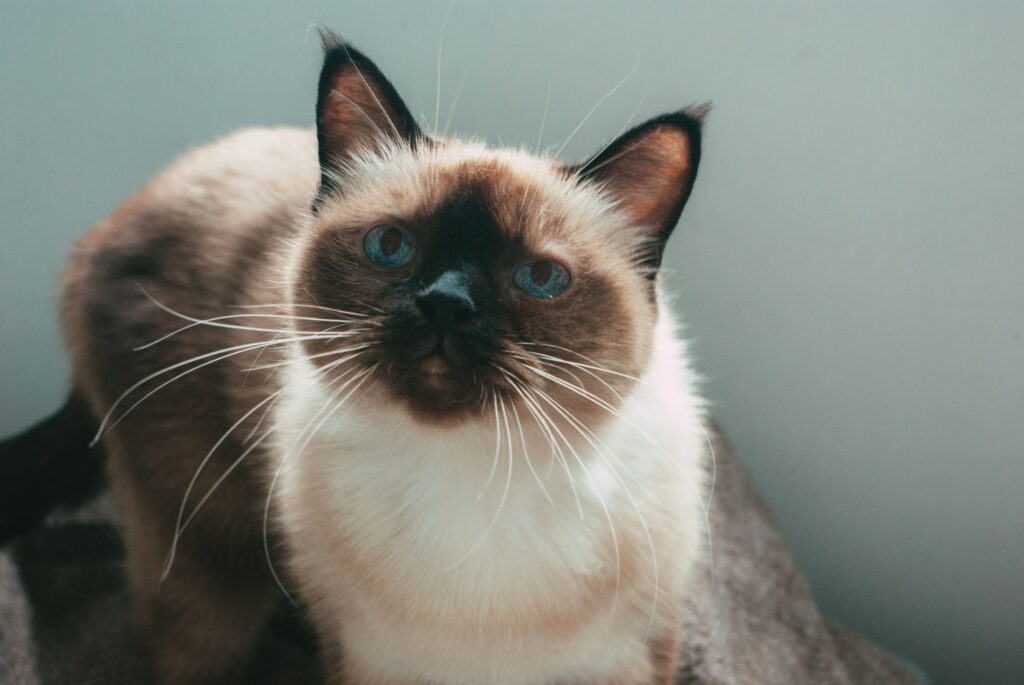
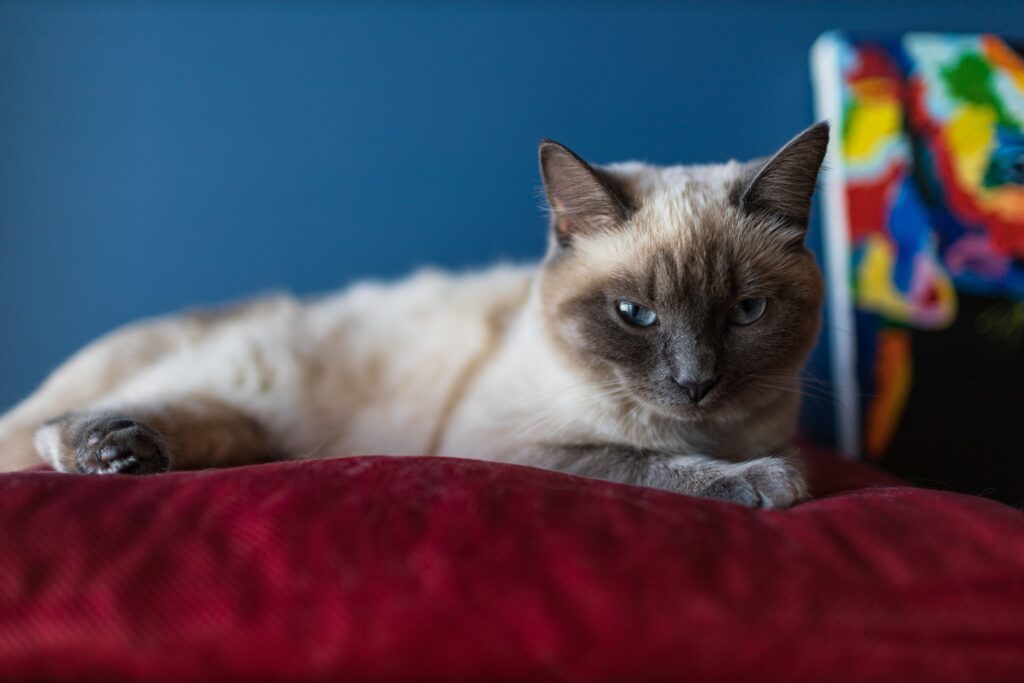
- Colorpoint British Shorthair: Similar to a Siamese pattern, Colorpoints have lighter body fur with darker points on the face, ears, paws, and tail. This coat pattern is genetically tied to blue eyes, which remain vibrant throughout the cat’s life.
- White British Shorthair: Solid white British Shorthairs can have permanent deep blue eyes, amber eyes, or “odd eyes” (one blue eye and one gold/amber eye).
- Silver / Golden Colorpoint Variants: Variations like Silver Shade Point or Golden Point also retain vivid blue eyes due to the point gene.
Do British Shorthair Eyes Stay Blue?
Whether a British Shorthair keeps blue eyes into adulthood depends on coat genetics:
- Young Kittens (Under 6–8 Weeks): Temporary Blue
- All British Shorthair kittens are born with dark blue eyes.
- For standard coat colors (like the classic British Blue grey fur, solid black, or cream), the blue is temporary. Between 7 and 12 weeks of age, pigment develops, gradually shifting their eyes to gold, amber, or deep copper.
- Colorpoint & Silver Point Variations: Permanent Blue
- If a British Shorthair kitten has permanent blue eyes as an adult, it possesses the Colorpoint gene (similar to Siamese patterning) or is a Silver/Golden Point.
- These kittens feature a light cream, silver, or off-white body with darker “points” on their ears, face, paws, and tail, paired with vivid, intense blue eyes that remain blue for life.
Coat vs. Eye Color Breakdown
| Coat Type | Eye Color at 4 Weeks | Eye Color in Adulthood |
| Solid Blue (Grey) | Soft Blue | Copper / Amber / Gold |
| Silver Shaded / Chinchilla | Soft Blue | Green or Blue-Green |
| Colorpoint (Lynx Point / Seal Point) | Deep Sapphire Blue | Permanent Blue |
Key Physical Characteristics
| Feature | Description |
| Head & Face | Round, plush head with full, chubby cheeks (“teddy bear” look) and a short, broad nose. |
| Coat | Short, exceptionally dense, crisp double coat that feels like plush velvet. |
| Body Build | Compact, sturdy, and heavy-boned body set on short, strong legs with rounded paws (“cobby” build). |
| Personality | Calm, easygoing, patient, and deeply affectionate without being overly clingy. |
Eye Color Quick Guide
- Solid Blue (Gray) British Shorthair: Adult cats have deep copper or gold/orange eyes (not blue).
- Colorpoint British Shorthair: Adult cats retain permanent blue eyes.
- Solid White British Shorthair: Adult cats can have permanent blue, amber, or odd eyes.
Do British Shorthair Kittens Keep Their Blue Eyes?
Whether eye color remains blue depends on coat pattern:
- Standard Coats (Solid Blue, Black, Cream, Tabby): No. Their eyes transition away from blue as melanin develops in the iris.
- Colorpoint Variants (Seal Point, Blue Point, Lynx Point): Yes. Colorpoint British Shorthairs retain vivid blue eyes for life because the point gene restricts pigment production in the eyes.
- Silver & Golden Shaded Coats: Variable. Silver shaded variants typically transition to striking green or blue-green eyes rather than remaining pure blue.
Eye Color Changes With Age
The eye color transition follows a predictable timeline during early development:
| Age Stage | Eye Color State | What Is Happening |
| 0 – 3 Weeks | Deep Blue | Eyes open around day 7–10; irises lack melanin entirely. |
| 6 – 7 Weeks | Transitional Grey / Muddy Yellow | Melanocytes begin producing pigment, causing blue to fade. |
| 8 – 12 Weeks | Yellow, Hazel, or Soft Gold | Permanent adult pigment becomes clearly distinguishable. |
| 4 – 12 Months | Deep Copper, Amber, or Orange | Full pigment intensity locks in (adult British Blue coats typically feature deep copper eyes). |
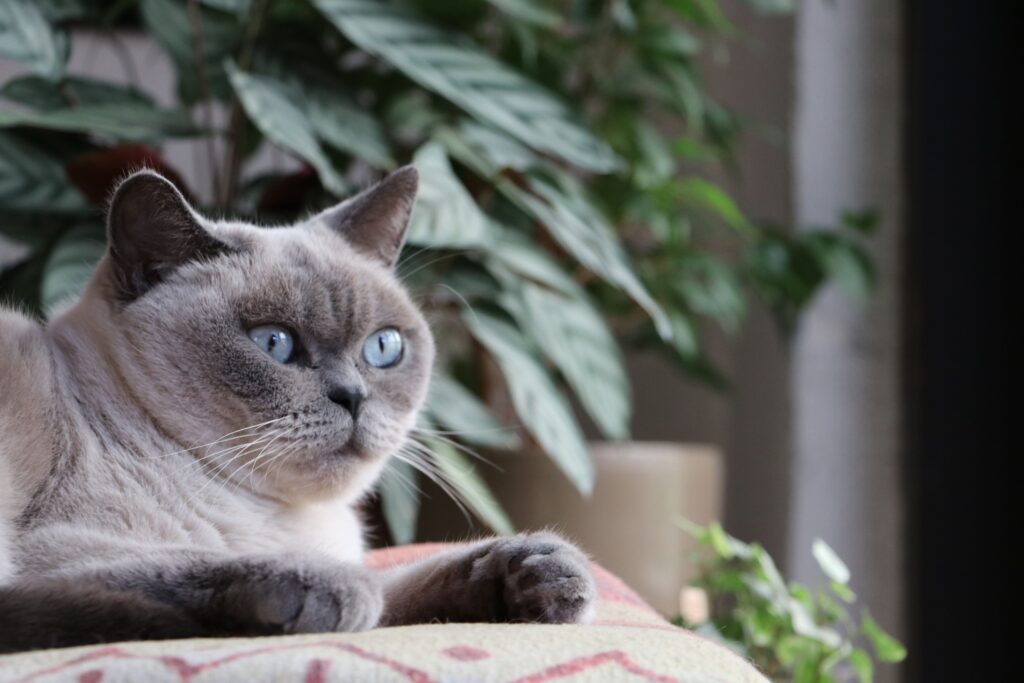
Do All British Shorthair Kittens Have Blue Eyes?
No.
British Shorthair kittens can have different eye colors depending on their coat color and genetic background.
Depending on the variety, mature British Shorthairs may have eyes in shades such as:
- Blue
- Gold
- Copper
- Orange
- Green
- Other colors associated with specific recognized varieties
Blue eyes are particularly associated with color point British Shorthairs.
This means that a blue-eyed British Shorthair is a specific variation rather than the standard appearance of every kitten in the breed.
British Shorthair Color point Kittens With Blue Eyes
Color point British Shorthairs are particularly interesting because their coloration is influenced by the same basic genetic mechanism responsible for the pointed pattern seen in several other cat breeds.
A color point British Shorthair typically has a lighter body with darker coloration developing on the:
- Face
- Ears
- Legs
- Paws
- Tail
The contrast between the lighter body and darker points can become more noticeable as the kitten grows.
The eyes remain blue, creating one of the most recognizable features of this color pattern.
What Does a Blue-Eyed British Shorthair Look Like?
The overall appearance depends on the kitten’s specific coat variety.
A British Shorthair kitten with blue eyes may have:
- A broad, rounded head
- Full cheeks
- Large, expressive eyes
- Small to medium-sized ears
- A short muzzle
- A compact, sturdy body
- Rounded paws
- A thick tail
- A dense, plush coat
- Blue eyes associated with its particular color variety
Colorpoint kittens can have a noticeably different appearance from the traditional solid-blue British Shorthair that many people associate with the breed.
British Shorthair Kitten Blue Eyes and Coat Color
Eye color and coat color are closely connected in cat genetics.
For example, the traditional British Blue has a blue-gray coat and is generally associated with copper or gold-colored eyes rather than blue eyes.
This is an important distinction for buyers. A kitten having a blue-gray coat does not automatically mean that it should have blue eyes.
On the other hand, a colorpoint British Shorthair can have blue eyes as a defining feature of its variety.
Can a British Shorthair Kitten’s Eye Color Change?
Yes, a kitten’s eye color can develop as it matures.
Many kittens are born with blue-looking eyes because the pigmentation process in the iris has not fully developed. As the kitten grows, pigment can increase and the eyes can change to their mature color.
This is why very young kittens should not always be judged by their current eye color alone.
For colorpoint cats, however, blue eyes are expected as part of the genetic characteristics of the colorpoint pattern.
If you are purchasing a particularly young kitten advertised as a British Shorthair kitten with blue eyes, ask the seller what color variety the kitten is and whether the expected mature eye color is documented.
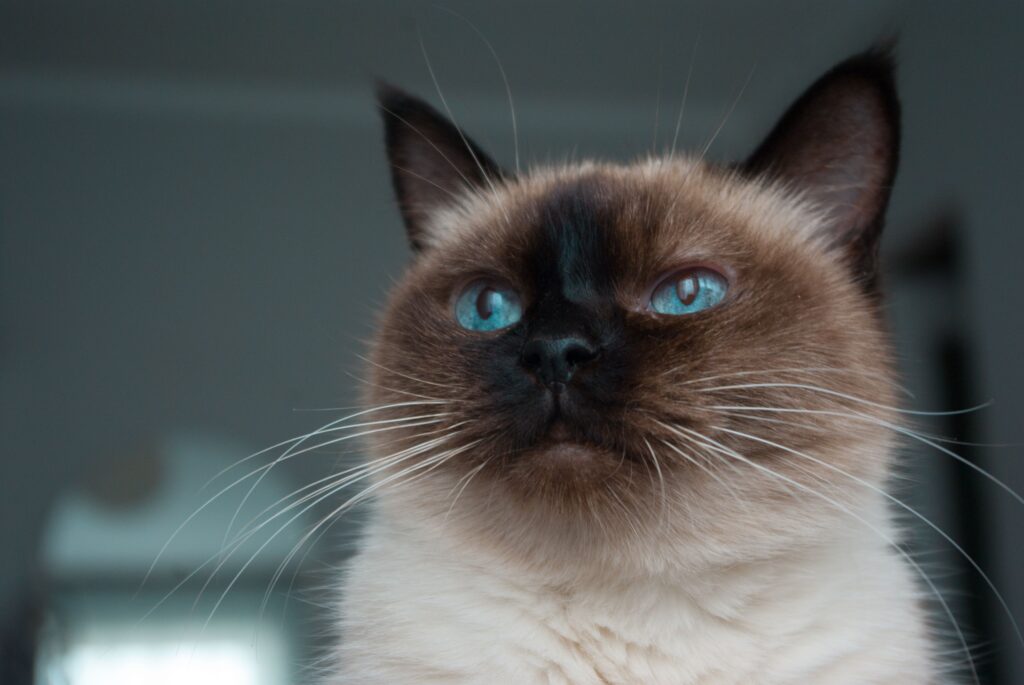
British Shorthair Kitten With Blue Eyes Personality
Eye color does not determine a cat’s personality.
A blue-eyed British Shorthair generally has the same broad temperament characteristics associated with the breed. British Shorthairs are often described as calm, intelligent, affectionate, and relatively independent.
A typical kitten may enjoy:
- Interactive play
- Exploring its surroundings
- Spending time with its owner
- Chasing toys
- Scratching
- Climbing
- Quiet resting periods
Individual personality varies considerably. Genetics, early socialization, handling, and the home environment all influence a kitten’s behavior.
Are Blue-Eyed British Shorthair Kittens Good Pets?
Yes, they can make excellent companions.
The blue eyes are an attractive physical feature, but the decision to bring one home should be based on more than appearance.
A suitable kitten should also have:
- Appropriate socialization
- Good general care
- Suitable nutrition
- Veterinary attention
- A safe environment
- A temperament compatible with your household
The color of a kitten’s eyes does not make it more or less loving, intelligent, or healthy.
Caring for a British Shorthair Kitten With Blue Eyes
Blue-eyed British Shorthair kittens generally require the same fundamental care as other British Shorthairs.
Their needs include:
- Balanced kitten nutrition
- Fresh water
- Regular veterinary examinations
- Appropriate vaccinations
- Parasite prevention
- A clean litter box
- Comfortable sleeping areas
- Scratching surfaces
- Daily play
- Social interaction
- A safe indoor environment
The kitten’s particular coat variety may influence grooming requirements, but the basic principles of responsible kitten care remain the same.
Grooming a British Shorthair Kitten With Blue Eyes
Grooming a British Shorthair kitten with blue eyes is straightforward due to their short, plush coat, but consistency is key. Establishing a gentle routine early ensures your kitten remains comfortable with handling as they mature into a heavy-boned adult cat.
1. Coat Care & Brushing
- Weekly Brushing Routine: Use a soft slicker brush or a stainless-steel comb 1 to 2 times a week. British Shorthairs have a plush, dense double coat that needs regular combing to remove loose undercoat fur and reduce shedding.
- Gentle Motion: Brush in the direction of hair growth using light pressure. Pay special attention to high-density areas along the back, neck ruff, and thighs.
- Increased Frequency During Shedding: During seasonal coat transitions (spring and autumn), increase brushing to 3–4 times a week to prevent hairballs.
2. Eye Care (Special Focus for Blue-Eyed Cats)
Colorpoint and white British Shorthairs with light fur around blue eyes can show tear staining more visibly than darker variants.
- Daily Inspection: Check the inner corners of the eyes for minor discharge or brownish buildup.
- Wiping Technique: Moisten a soft cotton pad or lint-free cloth with warm water or a pet-safe eye cleaning solution. Gently wipe outward from the inner corner. Always use a clean section of the pad for each eye to prevent cross-contamination.
3. Nail & Paw Care
- Routine Trimming: Inspect claws every 2 to 3 weeks. Trim just the transparent tip of the claw using sharp, pet-safe nail trimmers, taking care to avoid the pink quick (blood vessel inside the nail).
- Paw Handling: Touch and hold your kitten’s paws regularly during relaxed cuddle sessions so they become accustomed to foot handling without fear.
4. Ear Cleaning & Dental Maintenance
- Ear Inspections: Check ears weekly for dirt, excess wax, or redness. If cleaning is needed, wipe the visible outer ear canal with a damp cotton pad or dedicated ear wipe—never insert cotton swabs into the ear canal.
- Oral Hygiene: Introduce cat-friendly enzymatic toothpaste using a finger brush 2 to 3 times weekly to establish proper dental health habits early.
5. Bathing (Occasional Only)
Bathing is rarely required due to the self-cleaning nature of short cat coats. Unless your kitten gets into something dirty or sticky:
- Use a mild, hypoallergenic, or color-enhancing pet shampoo.
- Ensure water is comfortably warm.
- Towel-dry thoroughly in a draft-free room to keep their dense coat from retaining moisture.
British Shorthair Kitten Nutrition
British Shorthair kittens have dense bones, broad chests, and plush double coats that require specific nutritional support. Because this breed matures slowly over 3 to 5 years and has a lower energy output than sleeker breeds, their diet must balance rapid early growth with weight control to prevent obesity.
Core Dietary Requirements
- High Animal Protein: Look for foods where real meat (chicken, turkey, salmon) is the primary ingredient. High protein supports muscle development and the breed’s signature heavy frame.
- Controlled Fat Content: Essential fatty acids (Omega-3 and Omega-6) keep their dense, plush double coat healthy, but overall dietary fat must be monitored to manage weight.
- Essential Micronutrients: Adequate taurine for heart and eye health, along with balanced calcium and phosphorus levels to support strong skeletal structure.
Feeding Schedule & Portions by Age
| Age | Feeding Frequency | Food Type & Focus |
| 8–12 Weeks | 4 meals per day | High-protein wet kitten food combined with moistened kibble. |
| 3–6 Months | 3 meals per day | Dedicated kitten formula to support peak muscle and bone growth. |
| 6–12 Months | 2–3 meals per day | Measured portions of kitten formula; begin monitoring body condition score. |
| 12+ Months | 2 meals per day | Gradual transition to adult British Shorthair or indoor adult formula. |
Wet vs. Dry Food Balance
- Wet Food Benefits: Provides critical hydration to prevent urinary tract issues and helps control calorie intake due to lower energy density.
- Dry Food Benefits: Promotes dental health through mechanical abrasion on kibble designed for broad jaw structures, though portions should be strictly measured rather than free-fed.
Hydration & Serving Guidelines
- Controlled Portioning: Avoid free-feeding dry food. Measure daily meals based on weight and activity level, as British Shorthairs are prone to weight gain.
- Fresh Water Access: Provide daily fresh water in shallow ceramic or stainless-steel bowls, or use a circulating water fountain.
- Dietary Transitions: Switch foods slowly over 7 to 10 days by mixing increasing amounts of the new food with the old food to prevent digestive upset.
Health Care for a Blue-Eyed British Shorthair Kitten
A blue-eyed British Shorthair should receive the same routine preventive veterinary care as other kittens.
This can include:
- Physical examinations
- Vaccinations
- Parasite prevention
- Deworming when recommended
- Weight monitoring
- Dental care
- Spay or neuter discussions
- Breed-appropriate health screening
A kitten’s eye color alone does not indicate whether it is healthy.
When purchasing a kitten, ask for relevant health information and arrange an examination with your own veterinarian after bringing the kitten home.
Do Blue-Eyed Cats Have Poor Eyesight?
Blue eyes do not automatically mean that a cat has poor eyesight.
Eye color and visual ability are different characteristics.
However, certain genetic combinations that affect pigmentation can be associated with particular health considerations in some cats. Therefore, prospective owners should evaluate the kitten’s overall health rather than assuming that blue eyes are either a health problem or a guarantee of perfect health.
If a kitten shows symptoms such as persistent discharge, redness, cloudiness, swelling, excessive squinting, or sensitivity to light, veterinary attention is appropriate regardless of eye color.
British Shorthair Kitten With Blue Eyes and Hearing
There is a common misconception that every blue-eyed cat is deaf.
This is not true.
The well-known association between white cats, blue eyes, and congenital deafness involves specific genetic factors related to white pigmentation. It should not be generalized to every blue-eyed cat.
A blue-eyed British Shorthair should not automatically be assumed to have a hearing problem simply because its eyes are blue.
If there are concerns about a kitten’s hearing or response to sound, a veterinarian can advise on appropriate evaluation.
How to Choose a British Shorthair Kitten With Blue Eyes
If you are searching for a British Shorthair kitten with blue eyes for sale, look beyond photographs.
Before choosing a kitten, ask the seller about:
- The kitten’s age
- Coat color and pattern
- Expected adult appearance
- Eye color
- Parentage
- Pedigree documentation, where applicable
- Vaccination history
- Veterinary examinations
- Parasite treatment
- Feeding routine
- Socialization
- Health screening
- Living conditions
A responsible seller should be comfortable answering reasonable questions about the kitten.
How to Tell if a Blue-Eyed British Shorthair Is Purebred
Eye color alone cannot establish whether a kitten is purebred.
If pedigree status is important to you, request appropriate registration or pedigree documentation from the breeder or relevant cat registry.
A kitten with a round face, plush coat, and blue eyes may look like a British Shorthair, but appearance alone does not prove pedigree.
This is particularly important because many domestic cats can have similar physical characteristics.
British Shorthair Kitten With Blue Eyes vs. British Blue
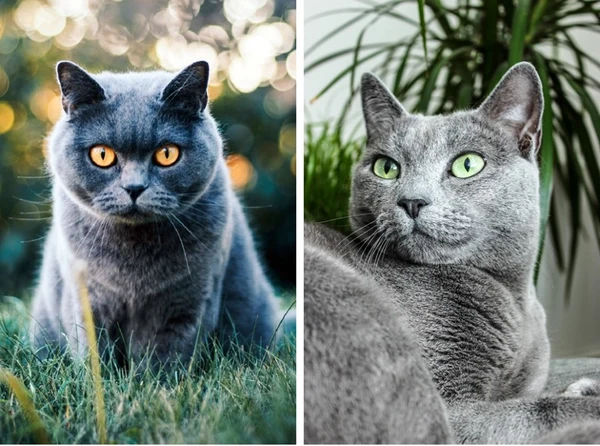
A blue-eyed British Shorthair and a traditional British Blue belong to the same overarching breed, but they differ significantly in coat pattern and genetic eye color.
The term “British Blue” refers specifically to a solid grey-blue coat paired with copper eyes, whereas blue eyes in an adult British Shorthair require specific coat patterns like Color point or solid white.
Direct Comparison
| Feature | British Shorthair with Blue Eyes | British Blue (Classic) |
| Coat Color | Pointed (Siamese-style), solid white, or silver/golden point variants. | Solid grey-blue throughout with no point markings. |
| Adult Eye Color | Permanent vivid blue (genetically linked to point or white genes). | Deep copper, orange, or amber (blue eyes only during early kittenhood). |
| Coat Genetics | Requires recessive colorpoint genes ($cs$) or dominant white genes. | Expression of the dilute black gene ($d/d$). |
| Availability | Less common; bred through specialized colorpoint lines. | Highly common; the flagship, most recognizable variety of the breed. |
| Temperament | Calm, easygoing, and loyal; identical breed personality. | Calm, easygoing, and loyal; identical breed personality. |
Key Distinction to Remember
If you see a grey-blue kitten with blue eyes, it is likely just a young British Blue kitten whose eyes have not yet changed. Solid blue adult British Shorthairs never have permanent blue eyes—their eyes shift to copper or gold between 6 and 16 weeks of age. For permanent blue eyes in an adult cat, you must choose a pointed or white British Shorthair variant.
British Shorthair Kitten With Blue Eyes vs. Ragdoll
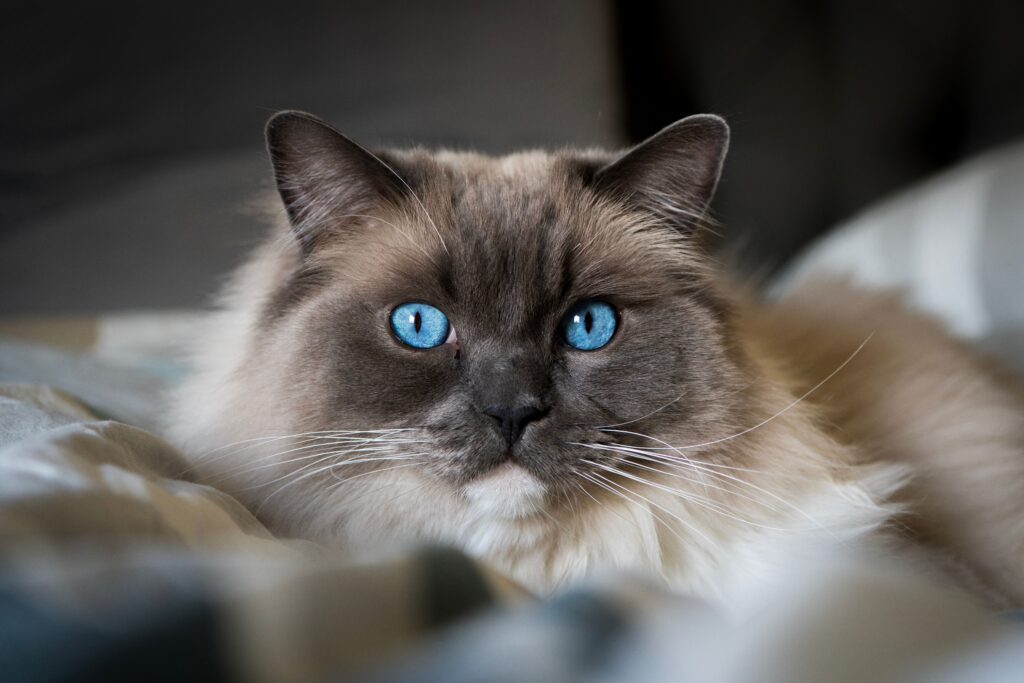
While both a blue-eyed British Shorthair (typically a Color point) and a Ragdoll feature striking blue eyes and pointed coats, they are distinct breeds with major differences in build, coat texture, and personality.
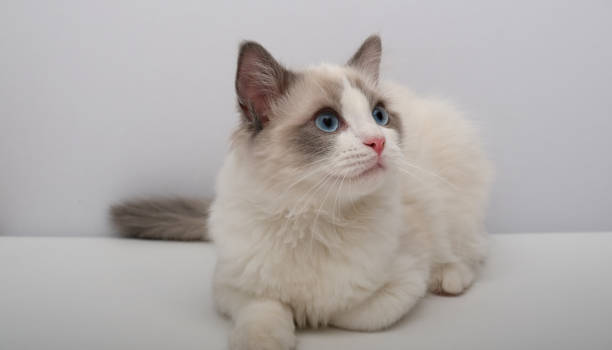
Direct Comparison
| Feature | British Shorthair (Blue Eyes) | Ragdoll |
| Coat Length & Texture | Short, plush, dense double coat (“teddy bear” feel). | Semi-longhaired, silky single coat with minimal undercoat. |
| Body Shape | Compact, stocky, “cobby” build with short legs and a round head. | Large, long, muscular frame with a broader chest and wedge-shaped head. |
| Adult Weight | 9–17+ lbs ($4–7.7\text{ kg}$). | 10–20+ lbs ($4.5–9+\text{ kg}$). |
| Affection Style | Independent devotion; prefers sitting nearby over being held. | “Velcro cat”; famously goes limp when held and actively seeks lap cuddles. |
| Grooming Needs | Low-to-medium; weekly brushing to manage plush density. | Medium; 2–3 times weekly brushing to prevent mats in longer fur. |
Key Differences to Help You Choose
- Choose a Blue-Eyed British Shorthair if: You want a calm, low-maintenance companion with a plush, short coat who is happy entertaining themselves while you work and prefers standing alongside you rather than being carried.
- Choose a Ragdoll if: You want a large, highly affectionate, lap-seeking “puppy-cat” with long, silky fur who loves being picked up, carried around, and involved in everything you do.
Preparing Your Home for a Blue-Eyed British Shorthair Kitten
Bringing home a blue-eyed British Shorthair—typically a point-color variety like Silver Point or Color point—requires setting up a calm, safe environment tailored to their stocky build and easygoing personality.
1. Create a Safe Starter Room
Start your kitten in a single quiet room (like a bathroom or bedroom) for the first 3–7 days to prevent them from feeling overwhelmed by a large home.
- Essential Setup: Place their bed, food, water, and litter box in this room, keeping food and litter separated by at least 5 feet.
- Hiding Spots: Provide a cozy covered bed or cardboard box lined with a soft blanket where they can retreat if feeling shy.
2. Kitten-Proofing Essentials
British Shorthairs are curious, thick-bodied cats that love exploring at ground and medium heights.
- Secure Cables: Bundle and cover electronic cords with cord protectors to prevent chewing.
- Remove Hazards: Store away small objects (hair ties, rubber bands, string), house plants toxic to cats (lilies, pothos, monstera), and household chemicals.
- Window Safety: Ensure window screens are firmly latched—curious kittens will jump at birds or insects.
3. Essential Gear Checklist
| Category | Recommended Items | Notes |
| Feeding | Stainless steel or ceramic bowls | Avoid plastic, which harbor bacteria and cause chin acne. |
| Litter Box | Low-entry open litter box + unscented litter | Keep the exact litter brand the breeder used for smooth transition. |
| Scratching | Heavy-base sisal post or cardboard scratcher | British Shorthairs get heavy quickly; sturdy bases prevent tipping. |
| Grooming | Soft slicker brush & rubber curry brush | Their dense double coat needs weekly brushing to minimize shedding. |
4. Arrival & Acclimation
- First Hours: Open the carrier inside the starter room and let the kitten step out on their own time. Speak softly and avoid forcing interactions.
- Litter Orientation: Gently place them inside the litter box once so they know its exact location.
- Diet Consistency: Feed the exact food brand and schedule provided by the breeder for at least 2 weeks before making gradual dietary changes.
Frequently Asked Questions
Are all British Shorthair kittens born with blue eyes?
Yes, most kittens are born with blue eyes. In many cases, the color changes as they mature.
Do blue eyes mean the kitten is rare?
Not necessarily. Permanent blue eyes are less common, but temporary blue eyes are normal in young kittens.
Are they affectionate?
Yes. British Shorthairs are affectionate without being overly clingy.
Do they shed?
They shed moderately, especially during seasonal coat changes. Weekly brushing helps keep shedding under control.
Are they easy to train?
Yes. Their intelligence and calm nature make them responsive to positive reinforcement.
Can they live in apartments?
Absolutely. Their moderate activity level makes them excellent apartment pets, provided they receive enough enrichment and playtime.
Tips for Long-Term Happiness
To help your british shorthair kitten with blue eyes thrive:
Conclusion
A british shorthair kitten with blue eyes is more than just a beautiful pet—they’re a loyal, calm, and affectionate companion that can bring joy for many years. Their plush coat, round face, and mesmerizing blue eyes make them one of the most admired kittens in the feline world.
Whether their blue eyes remain into adulthood or transition to the classic copper or gold shades, British Shorthairs are celebrated for their gentle temperament, adaptability, and easygoing nature. With proper nutrition, regular veterinary care, enriching play, and plenty of love, your kitten can grow into a healthy, confident, and devoted member of your family.
If you’re considering adding a british shorthair kitten with blue eyes to your home, take the time to choose a responsible breeder or reputable rescue organization, prepare your living space, and commit to providing lifelong care. The reward is a remarkable companion whose charming personality matches its unforgettable appearance.
What to NOTE concerning British Shorthair Kitten
A.) British Shorthair Kitten for Sale: What Should You Check?
If you are searching for a British Shorthair kitten for sale, avoid making your decision based only on coat color, photographs, or price.
The kitten’s health and upbringing should be among your first considerations.
Before purchasing, ask about:
1. Kitten’s Age
Make sure the kitten is old enough to leave its mother and has had sufficient time to develop socially.
2. Health Care
Ask whether the kitten has received appropriate veterinary examinations, vaccinations, parasite prevention, and other recommended care for its age.
3. Parents
When possible, learn about the kitten’s parents. Their health, temperament, appearance, and pedigree can provide useful information about the kitten’s background.
4. Living Conditions
A responsible breeder should be willing to explain how the kittens are raised. Look for kittens that appear clean, alert, comfortable, and well socialized.
5. Documentation
Depending on the seller and your location, documentation may include vaccination records, veterinary information, pedigree papers, or registration information.
6. Recent Photos or Video
If you cannot visit in person, request recent photographs or a live video showing the kitten and its environment.
b.) British Shorthair Kitten Buy: How to Make a Careful Choice
People searching British Shorthair kitten buy are often ready to purchase but may not know what questions to ask.
Before making a decision, consider the following checklist:
- Is the kitten alert and active?
- Does it have clear-looking eyes and a clean coat?
- Has it received appropriate veterinary care?
- What food is the kitten currently eating?
- How has the kitten been socialized?
- Can you see information about the parents?
- Are health and vaccination records available?
- What support does the breeder provide after purchase?
- Is the seller willing to answer detailed questions?
Be cautious when a seller refuses reasonable questions, provides only stock photographs, pressures you to make a quick payment, or cannot provide basic information about the kitten.
A beautiful photograph is not enough to determine whether a kitten is healthy or responsibly raised.
c.) British Shorthair Tabby Kitten: A Beautiful Pattern
A British Shorthair tabby kitten has a patterned coat rather than the classic solid appearance many people associate with the breed.
Tabby patterns can create striking markings across the body, face, and legs. Depending on the particular color and pattern, markings can range from bold and clearly defined to more subtle.
Popular tabby appearances may include:
- Classic tabby
- Mackerel tabby
- Spotted tabby
- Ticked tabby
- Silver tabby
- Golden tabby
If you are looking for a British Shorthair tabby kitten, ask the breeder to describe the kitten’s exact color and pattern rather than relying only on informal names used in advertisements.
d.) Golden British Shorthair Kitten: Why Is It So Popular?
The golden British Shorthair kitten has become particularly attractive to cat lovers because of its warm golden appearance and distinctive coat.
Golden coloration can vary considerably. Some kittens may have a richer golden appearance, while others can have lighter or shaded coloring.
When choosing a golden British Shorthair, remember that kitten coats can change as the cat matures. The appearance of a young kitten may not perfectly predict the final adult coat.
If color is especially important to you, ask for photographs of the parents and, where possible, examples of previous kittens from the same bloodline.
e.) British Shorthair Kitten Food: What Should You Feed?
Choosing suitable British Shorthair kitten food is an important part of raising a healthy kitten.
Kittens have different nutritional requirements from adult cats because they are growing rapidly. Their diet should therefore be formulated specifically for kittens and provide appropriate levels of protein, fat, vitamins, minerals, and calories.
A good feeding routine should include:
Kitten-Appropriate Food
Choose a complete and balanced food formulated for kittens rather than relying on adult cat food as the primary diet.
Fresh Water
Provide clean drinking water every day. Water should be easy for the kitten to access.
Consistent Feeding
Young kittens generally benefit from several appropriately sized meals throughout the day rather than being expected to eat one large meal.
Avoid Sudden Food Changes
If you bring home a kitten, find out what food it has already been eating. Changing its diet suddenly can cause digestive upset.
If you want to introduce a different food, transition gradually unless your veterinarian recommends otherwise.
Monitor Body Condition
British Shorthairs have a naturally sturdy appearance, but being naturally stocky does not mean a kitten should become overweight.
Your veterinarian can help you determine whether the kitten is growing appropriately and whether its feeding amount needs adjustment.
f.) How Much Does a British Shorthair Kitten Cost?
The price of a British Shorthair kitten can vary significantly depending on several factors.
Common factors include:
- Pedigree and bloodline
- Breeder reputation
- Location
- Age
- Coat color and pattern
- Registration or pedigree documentation
- Veterinary care
- Vaccination status
- Whether the kitten is sold as a pet or with breeding rights
Very low prices should not automatically be considered a bargain. The cheapest kitten may not represent the lowest overall cost if proper veterinary care, documentation, nutrition, and responsible breeding practices have been neglected.
When comparing British Shorthair kittens, consider the kitten’s overall care and background rather than price alone.
g.) British Shorthair Kitten Colors and Patterns
One of the breed’s attractions is the wide variety of recognized colors and patterns.
Depending on the registry and breeding program, you may encounter British Shorthairs with:
- Blue coats
- Black coats
- White coats
- Cream coats
- Red coats
- Silver patterns
- Golden patterns
- Tabby patterns
- Bicolor patterns
- Shaded appearances
- Colorpoint patterns
If you have a specific color in mind, confirm exactly how the breeder or registry describes it.
h.) Preparing Your Home for a British Shorthair Kitten
Before your kitten arrives, prepare a safe and comfortable environment.
Your basic supplies can include:
- Kitten food
- Food and water bowls
- Litter box
- Appropriate litter
- Comfortable sleeping area
- Scratching post
- Interactive toys
- Grooming brush
- Cat carrier
- Kitten-safe hiding or resting area
Remove or secure items that could be dangerous to a curious kitten, including exposed electrical cables, small objects, toxic plants, and unsecured windows.
i.) British Shorthair Kitten Grooming
The breed’s dense coat benefits from regular grooming.
Gentle brushing can help remove loose hair and gives you an opportunity to check the kitten’s skin and coat.
Start grooming sessions gradually. Keep them short and positive so the kitten learns that brushing is a normal part of life.
You should also monitor the kitten’s:
- Eyes
- Ears
- Teeth
- Claws
- Coat
- Skin
If you notice anything unusual, contact a veterinarian rather than trying to diagnose the problem yourself.
j.) Is a British Shorthair Kitten Good for Families?
British Shorthairs can fit well into many different households, but individual personality matters.
They may be suitable for people who appreciate a companion that can enjoy interaction without necessarily demanding constant attention.
Families should teach children how to handle kittens gently and respectfully. Young children should always be supervised around a new kitten.
Other pets should also be introduced gradually rather than being immediately placed together.