
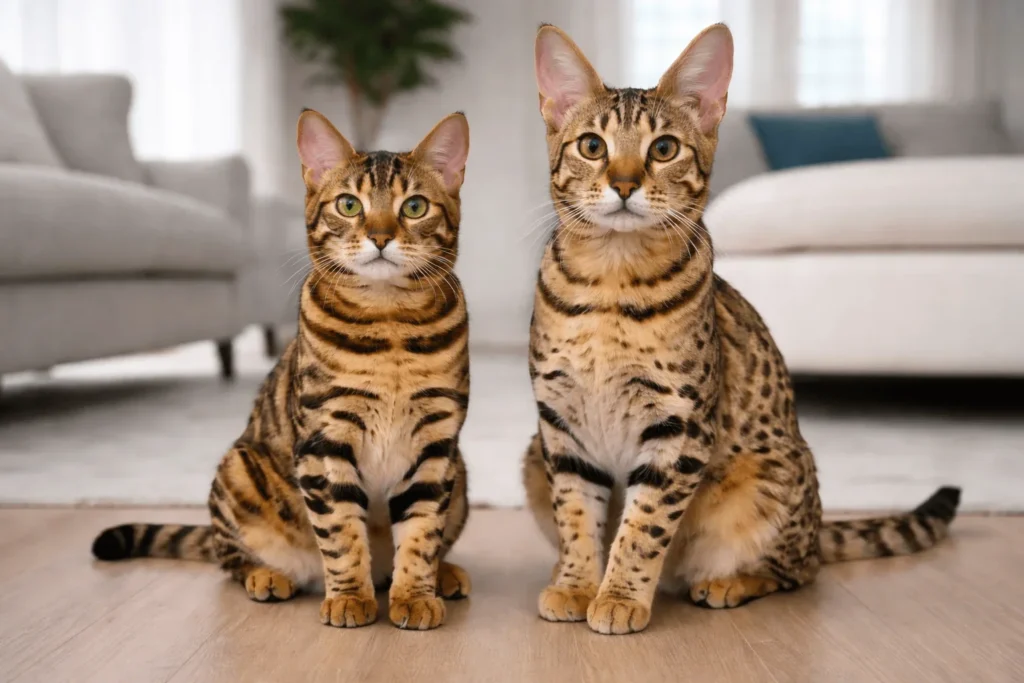
Are you trying to decide between a Bengal and a Savannah cat? Both breeds are admired for their exotic appearance, athletic bodies, and energetic personalities. However, despite their similarities, they have important differences in size, temperament, ancestry, activity levels, and care requirements.
Understanding the Bengal vs Savannah Cat comparison can help you determine which breed may be more suitable for your home and lifestyle.
Bengal cats are famous for their leopard-like spots, glittering coats, and playful personalities. Savannah cats are known for their tall bodies, long legs, large ears, and striking wild-looking appearance.
In this guide, Kittyverse Store explores the differences between Bengal and Savannah cats, including their physical characteristics, behavior, grooming needs, health considerations, and ownership requirements.
Bengal vs Savannah Cat: Quick Comparison
| Feature | Bengal Cat | Savannah Cat |
|---|---|---|
| Ancestry | Domestic cat breed developed using Asian leopard cat ancestry | Hybrid breed originating from a domestic cat and the serval |
| Appearance | Muscular body, spotted or marbled coat, distinctive markings | Tall, athletic body, long legs, large ears, spotted coat |
| Size | Generally medium to large | Can be substantially taller and larger, especially in earlier generations |
| Personality | Often curious, playful, intelligent, and energetic | Often active, curious, intelligent, and adventurous |
| Activity level | High | Often very high, depending on generation and individual |
| Grooming | Usually relatively low-maintenance short coat | Usually relatively low-maintenance short coat |
| Coat pattern | Spotted or marbled patterns are characteristic | Spotted coat is characteristic |
| Exercise needs | Interactive play, climbing, and enrichment | Extensive enrichment, climbing, play, and secure surroundings |
| Ownership considerations | Research breeder practices and any local restrictions | Generation, local laws, housing requirements, and individual needs are especially important |
Individual cats vary, and these general characteristics should not be treated as guarantees about every Bengal or Savannah.
1. Appearance: Bengal Cat vs Savannah Cat
What Does a Bengal Cat Look Like?
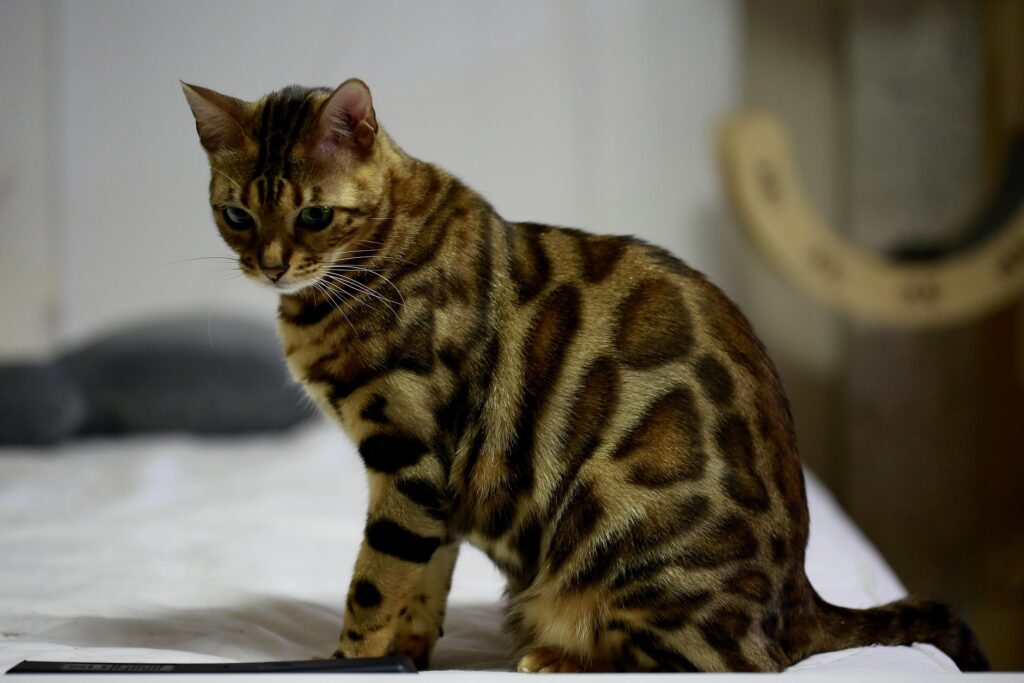
Bengal cats have a muscular, athletic build and a short coat that often resembles the markings of a wild leopard. Their coats may feature rosettes, spots, or marbled patterns.
One of the breed’s most recognizable characteristics is its striking coat, which can have a glossy appearance. Bengal cats may come in several recognized colors and patterns, including brown, silver, and snow variations.
Their bodies are generally strong and agile, with a relatively broad head, prominent cheekbones, and alert eyes.
Bengals combine an exotic appearance with domestic-cat characteristics, making them attractive to people who admire unusual coat patterns.
What Does a Savannah Cat Look Like?
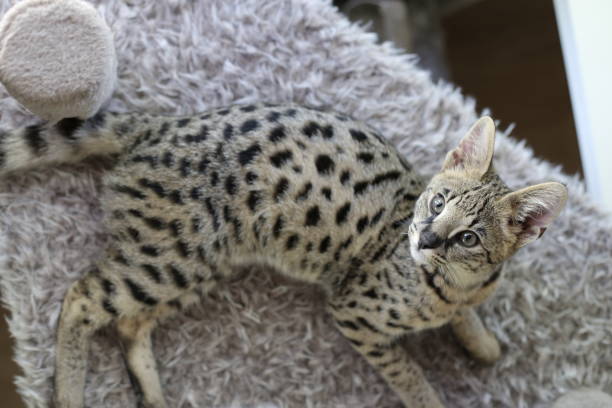
Savannah cats are known for their tall, slender, athletic bodies. They often have long legs, large upright ears, and a relatively long neck.
Their spotted coats contribute to their wild-looking appearance. Their overall shape and proportions can make them look different from many other domestic cats.
A Savannah’s appearance can vary significantly depending on its generation and ancestry. Earlier-generation Savannahs may retain more noticeable physical characteristics associated with the serval, while later generations may differ in size and appearance.
Main appearance difference: Bengals are especially recognizable for their leopard-like rosettes and muscular bodies, while Savannahs are known for their tall stature, long legs, large ears, and spotted coats.
2. Size and Weight Differences
Size is one of the most noticeable differences in the Bengal vs Savannah Cat comparison.
Bengal Cat Size
Bengals are generally medium-to-large domestic cats with muscular bodies. Their athletic build gives them a powerful appearance without necessarily making them exceptionally tall.
Adult size varies according to genetics, sex, nutrition, and individual development.
Savannah Cat Size
Savannah cats can be taller and longer-legged than Bengals. Their size varies considerably depending on generation, sex, and ancestry.
Earlier-generation Savannahs may be particularly large and tall, while later-generation cats can be closer in size to other domestic cats.
It is important not to assume that every Savannah will be larger than every Bengal. Individual cats can overlap in size.
If size is a major consideration, ask about the kitten’s parents, generation, and expected adult development rather than relying only on the breed name.
3. Personality: Bengal vs Savannah Cat
Both breeds are often described as intelligent, curious, and energetic. However, their individual personalities and needs can differ.
Bengal Cat Personality
Bengals are frequently playful, alert, and curious. Many enjoy exploring their surroundings, climbing, chasing toys, and participating in interactive activities.
They may form strong relationships with their owners and enjoy being involved in household routines.
Because they can be energetic and intelligent, Bengals benefit from regular play, puzzle toys, climbing structures, and other forms of enrichment.
A Bengal that does not receive enough stimulation may become bored and develop unwanted behaviors.
Savannah Cat Personality
Savannah cats are also known for their curiosity, intelligence, and athleticism. Some enjoy exploring, learning activities, climbing, and interactive games.
Their behavior can vary substantially depending on their generation, upbringing, socialization, and individual temperament.
Some Savannahs may be particularly demanding of attention and environmental enrichment. Prospective owners should research the needs of the specific generation they are considering.
Personality difference: Both breeds can be active and engaging companions. Bengals are often associated with playful domestic-cat behavior, while Savannahs may have additional care and management considerations connected to their hybrid ancestry and generation.
Neither breed is guaranteed to be calm, cuddly, or comfortable with every household.
4. Energy Levels and Exercise Requirements
If you are looking for a relaxed cat that spends most of the day sleeping, either breed may require more activity and engagement than you expect.
Bengal Exercise Needs
Bengals generally benefit from:
- Daily interactive play sessions.
- Cat trees and climbing opportunities.
- Toys that encourage chasing and problem-solving.
- Puzzle feeders and other mental enrichment.
- Safe spaces where they can explore.
Providing a stimulating environment can help satisfy their natural curiosity and activity needs.
Savannah Exercise Needs
Savannah cats also need opportunities for physical activity and mental stimulation. Depending on their generation and individual temperament, their needs may be particularly demanding.
Useful enrichment may include:
- Secure climbing structures.
- Interactive toys and supervised play.
- Food puzzles and training activities.
- Safe exploration areas.
- Secure outdoor enclosures where appropriate.
Because Savannah cats can be agile and athletic, owners should take care to secure windows, doors, and outdoor spaces.
Never assume that a cat can safely roam outdoors simply because it is athletic or has wild ancestry.
5. Grooming and Shedding
Both Bengal and Savannah cats generally have short coats that are relatively straightforward to maintain.
Bengal Grooming
Bengals usually benefit from occasional brushing to remove loose hair and help keep their coats in good condition.
Regular grooming also gives owners an opportunity to check for skin changes, parasites, or other concerns.
Savannah Grooming
Savannah cats also generally have short coats and do not usually require the intensive coat maintenance associated with some long-haired breeds.
Occasional brushing, nail care, dental care, and routine veterinary examinations remain important.
Both breeds shed, although the amount varies between individual cats and can change with the season, health, and environment.
6. Are Bengal and Savannah Cats Good Family Pets?
Both breeds can live in family homes, but prospective owners should carefully consider their activity levels, temperament, and environmental needs.
Bengals in Family Homes
A well-socialized Bengal may enjoy interacting with family members and participating in playtime.
However, their energetic nature means they may need more stimulation than a household expecting a quiet, low-activity companion can provide.
Children should be taught to handle cats gently and respect their need for rest and personal space.
Savannahs in Family Homes
Savannah cats may suit households that can provide suitable enrichment, supervision, and secure surroundings.
Their needs can vary considerably by generation and individual temperament. Earlier-generation Savannahs may have additional management considerations, so prospective owners should seek knowledgeable advice before bringing one home.
Families should consider whether they can provide the time, space, and care the particular cat requires.
Important: A breed label alone cannot determine whether a cat will be suitable for children, other pets, or a particular household. Meeting the individual cat and learning about its socialization are valuable steps.
7. Health and Veterinary Care
Bengal and Savannah cats need routine veterinary care, appropriate nutrition, preventive health measures, and a safe living environment.
Bengal Health Considerations
Bengals may be affected by certain inherited health conditions, including hypertrophic cardiomyopathy (HCM), a disease of the heart muscle.
Responsible breeders should be willing to discuss relevant health screening, the health history of the parents, and any known concerns in their breeding lines.
Savannah Health Considerations
Savannah cats also require appropriate veterinary monitoring. Their hybrid ancestry and generation may be relevant when discussing their background and care.
Prospective owners should seek a veterinarian who is comfortable caring for the particular cat and can advise on preventive care, nutrition, and any breed- or generation-related considerations.
Before purchasing either breed, ask about:
- Veterinary examinations.
- Vaccination and parasite-prevention records.
- The kitten’s health history.
- Relevant health screening of the parents.
- Feeding and socialization.
- Any known inherited conditions.
No breed is completely free of health risks, and a kitten’s appearance alone cannot establish that it is healthy.
8. Bengal vs Savannah Cat: Which Is More Expensive?
The price of either breed can vary considerably.
Factors that may influence the cost include:
- Breeder reputation and practices.
- Pedigree and documentation.
- Generation and ancestry, particularly for Savannah cats.
- Location and local demand.
- Veterinary care and health screening.
- Age, availability, and individual characteristics.
Savannah cats, especially certain earlier generations, may command higher prices because of their ancestry and breeding requirements. However, prices vary, and it is not accurate to assume that every Savannah costs more than every Bengal.
When comparing listings, look beyond the advertised price. Review the kitten’s health records, breeder information, documentation, and the care included in the purchase.
9. Legal and Ownership Considerations
Before choosing either breed, check the laws and regulations that apply where you live.
Some jurisdictions have restrictions on hybrid cats, and the rules may depend on the animal’s generation or ancestry. Savannah cats can be subject to specific ownership requirements.
Bengal ownership may also be regulated in some locations, particularly for certain generations or animals with more recent wild ancestry.
Rules can differ between countries, states, provinces, and municipalities. Housing agreements and insurance policies may also have relevant restrictions.
Do not assume that a breed is legal to own everywhere. Confirm the current local requirements before paying a deposit or arranging transportation.
10. How to Choose Between a Bengal and a Savannah Kitten
If you are deciding between these breeds, consider your lifestyle, experience with cats, available space, and ability to provide daily enrichment.
A Bengal may appeal to you if you admire a muscular domestic cat with a distinctive spotted or marbled coat and an active, curious personality.
A Savannah may appeal to you if you are interested in a tall, athletic cat and are prepared to research its generation, individual temperament, and any additional ownership requirements.
Before choosing a kitten:
- Research the breed and its care needs.
- Ask the breeder about the kitten’s parents and background.
- For a Savannah, confirm its generation and relevant documentation.
- Review veterinary records and available health screening.
- Ask about the kitten’s temperament and socialization.
- Check local ownership regulations.
- Make sure your home can provide safe play, exercise, and enrichment.
- Consider long-term costs, including food, veterinary care, and environmental needs.
The best choice is the individual cat whose needs and temperament fit your household.
Frequently Asked Questions
Is a Bengal cat bigger than a Savannah cat?
Savannah cats can be taller and longer-legged than Bengals, particularly in earlier generations. However, size varies considerably, and some individual Bengals may be larger than some Savannahs.
Are Bengal cats and Savannah cats the same breed?
No. Bengals and Savannahs are distinct breeds with different ancestry and breed histories. Bengals were developed using Asian leopard cat ancestry, while Savannahs originated from crosses involving domestic cats and servals.
Which is more active, a Bengal or a Savannah?
Both breeds can be highly active and benefit from daily play and enrichment. Savannahs may have particularly demanding exercise and management needs depending on their generation and individual temperament.
Do Bengal and Savannah cats shed?
Yes. Both breeds shed, although their short coats are generally relatively easy to maintain with routine brushing. Shedding varies between individual cats and can change seasonally.
Are Bengal cats or Savannah cats hypoallergenic?
Neither breed is guaranteed to be hypoallergenic. Both can produce allergens that trigger reactions in sensitive people. Anyone with cat allergies should spend time around the particular cat, if possible, and seek appropriate medical advice.
Can Bengal and Savannah cats live indoors?
Yes, both can live indoors when their physical, social, and environmental needs are met. They benefit from interactive play, climbing opportunities, and mental stimulation. Secure windows, doors, and suitable enrichment are particularly important for active cats.
Is a Savannah cat a wild cat?
Savannah cats are hybrid cats with serval ancestry, but they are not the same as a wild serval. Their generation and ancestry can influence their characteristics and ownership requirements.
Which breed is easier for a first-time cat owner?
There is no universal answer. Both breeds can have substantial activity and enrichment needs. A first-time owner should carefully research the individual cat, its generation where relevant, and whether they can meet its long-term care requirements.
Final Thoughts: Bengal vs Savannah Cat
When comparing Bengal vs Savannah Cat, consider more than their exotic appearance.
Bengals are known for their muscular bodies, leopard-like coat patterns, curiosity, and playful behavior. Savannahs are recognized for their tall, athletic build, large ears, spotted coats, and energetic personalities.
Both breeds can be engaging companions, but they need owners who understand their activity levels, health care, and environmental requirements. Savannah generation and local ownership regulations are additional factors to investigate.
Take time to research the breeder, review health information, and consider the temperament of the individual kitten before making a decision.
At Kittyverse Store, we encourage prospective cat owners to learn about different breeds and choose a companion whose needs and personality fit their home.